
Guide · 5 min read
Dhoti and Kanduva: Traditional Deeksha Attire Explained
Learn how dhoti and kanduva fit into Ayyappa deeksha daily routine — when to wear them, how they pair with black shirts, and sizing tips for first-time buyers.
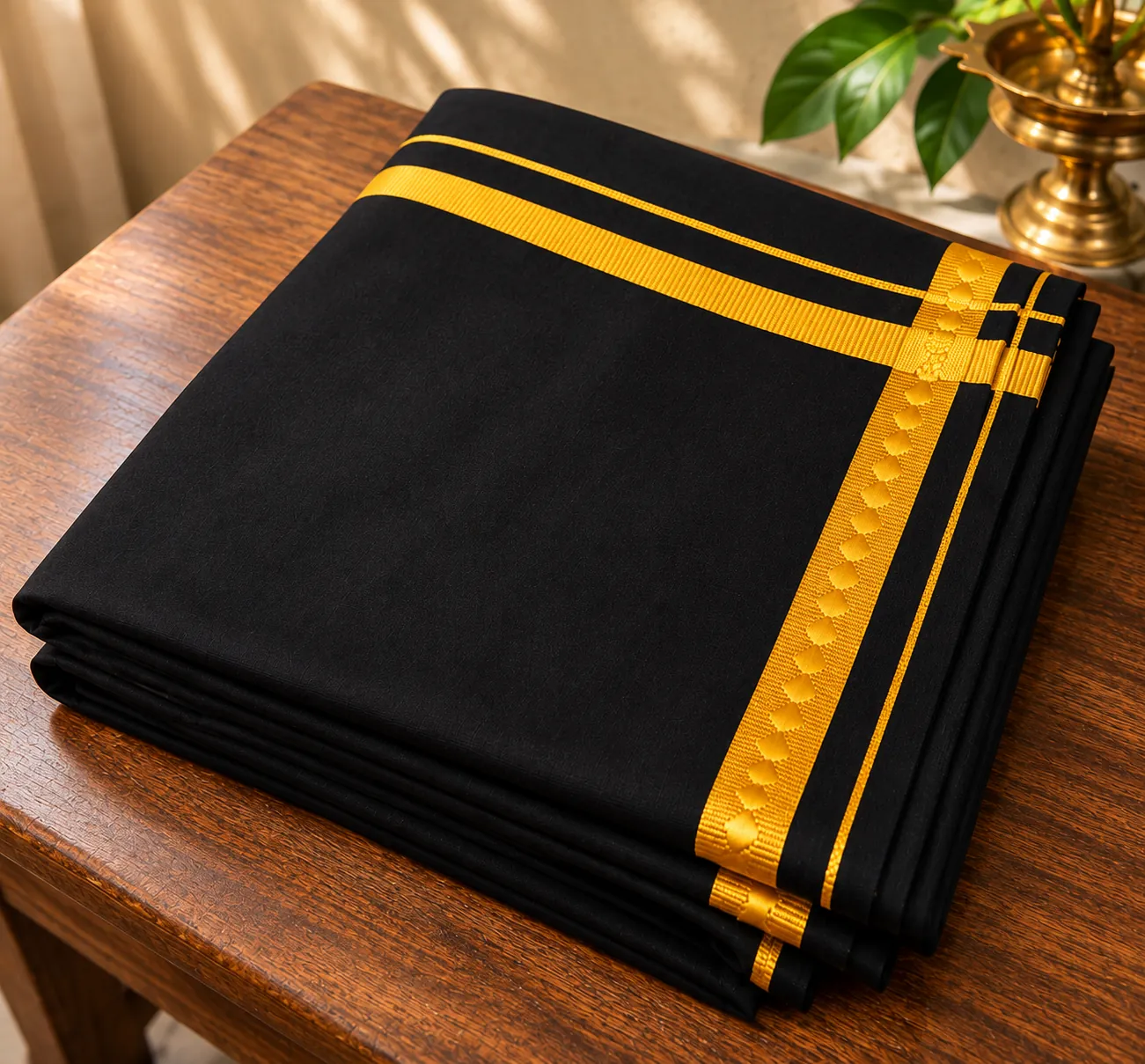
Dhoti and kanduva are the most visible symbols of traditional deeksha attire after the malas. The dhoti wraps the lower body for pooja and temple; the kanduva rests on the shoulder and is used in bath and ritual sequences. Together with a black shirt, they form the classic look devotees wear during Mandala Kalam.
When devotees wear dhoti vs pant
Many devotees wear black pants for office and commute, then change into dhoti for pooja at home or visits to the temple. Others wear dhoti throughout the vratham when their schedule allows. Neither choice replaces deeksha rules around purity — follow your tradition for bath and changing sequence.
Role of the kanduva
Kanduva acts as a ritual cloth: worn over the shoulder after bath, used during naivedyam and arati in some households, and carried as a spare during travel. Because it touches the body during sacred routines, devotees often keep two kanduvas in rotation — one washing while the other is worn.
Buying your first set
If you are new to deeksha, order dhoti and kanduva together with your shirt size confirmed on the size guide. Combos include both pieces pre-matched with malas so you do not miss an essential item on Day 1. Questions? Message us on WhatsApp with your height and usual shirt size for a quick recommendation.